



Rebrand or refresh – which does your business need?
How to tell whether your business needs a brand refresh or a full rebrand, what each one costs, and the roll-out bill most people forget to budget for.
Merchandise design from Conker Studio gives your business tees, hoodies, caps and totes that people choose to wear, not just put up with. From a single staff polo to a full drop of slogan prints and patches, I design the artwork, show you realistic mock-ups and supply files your printer can use straight away. Based in Grimsby, I work with gyms, clubs, cafes and trades across North East Lincolnshire, and you deal with me directly throughout.
The usual route is a logo dropped onto the chest of a stock tee, picked from a printer's catalogue at the last minute. It works as a uniform, but nobody buys it, nobody wears it at the weekend and nobody asks where it came from. Then the print comes back blurry, or the embroidery loses all its fine detail.
Good merchandise design starts with the garment, the print method and the person wearing it. That means thinking about colour counts, stitch limits and placement before anything goes to print, and giving people a reason to want it besides the logo.
The kit does its job as a uniform, but members and customers never ask to buy one.
You've been asked for "a vector" or "something higher resolution" and aren't sure what that means.
Colours drift between batches because there's no fixed spec for inks, threads or blanks.
You'd like slogans, a mascot or a limited run but have nothing other than the main mark to work with.
Each item is designed for the product it's going on and the way it will be made.
Designs for tees, hoodies, sweatshirts and caps, with placements set for chest, back, sleeve and front panel. Everything is worked out at real size, so a left-chest print sits around 9 to 10cm wide rather than being guessed on screen.
Totes, water bottles, woven or embroidered patches and stickers, each with its own limits on detail, colours and print area.
Uniforms need to be hard-wearing, consistent and easy to reorder, while merch people buy needs a reason to exist besides the logo. I'll plan both so they feel related but do different jobs.
Separated spot colours for screen print, high-resolution PNGs on transparent backgrounds for DTF, and simplified vectors your embroiderer can digitise cleanly. Supplied as AI, PDF, SVG and PNG with Pantone references.
Realistic previews on the actual garment colours and blanks you're ordering, so you can check placement and scale before spending money on stock.
Slogan sets, seasonal drops, club badges and illustrated mascots that give a collection personality and a reason to collect the next one.

A seagull mascot, slogan prints and a Lifting Club badge turned the gym's identity into a proper range for members. Designed across tees, totes, bottles and patches, each piece works on its own and as part of the set.
A confident wordmark and ampersand monogram built to hold up on workwear, van doors and hi-vis. A good example of staff kit that has to stay clear, simple and consistent on site.
We talk about who the merch is for, quantities, your budget per piece and whether you already have a printer.
I sketch ideas, then develop the strongest into artwork, shown as mock-ups on your chosen garments and colours.
You give feedback and we adjust placement, sizes and colours until everything is signed off.
I prepare print-ready files for each method and send them to you or your printer, with a simple spec sheet for reorders.
The questions I'm asked most about merchandise design. If yours isn't here, just get in touch.
 Enquire
Merchandise design starts from £150 per item, so a tee design and a patch would each be priced as one piece. Every project gets a fixed quote before work starts, and I'm not VAT registered, so there's nothing to add on top.
A single merchandise design usually takes one to two weeks from brief to final files, depending on how quickly feedback comes back. A full range takes longer, so if you're working towards a launch, event or open day, tell me the date early and we'll plan backwards from it.
No, I design the artwork and supply it to your printer in the format they need. I'm happy to talk to them about garment blanks, ink colours and minimum order quantities so nothing gets lost in between.
Screen print is good value for larger runs and bold, flat colours. DTF suits smaller runs and detailed, full-colour designs, while embroidery gives caps, polos and hoodies a hard-wearing finish but needs simpler shapes and thicker lines.
Usually vector artwork (AI, PDF or SVG) for screen print and embroidery, and a high-resolution PNG on a transparent background for DTF. You'll get all of these, clearly labelled, with Pantone references so reorders match.
Yes, most merchandise design starts that way. If your logo struggles when small or in one colour, have a look at branding for gyms or logo design first.
I'm based in Grimsby and work with businesses across North East Lincolnshire, including Cleethorpes, Immingham, Waltham and Laceby. Most of the work happens over email and video calls, with face-to-face meetings whenever they're useful.
How to tell whether your business needs a brand refresh or a full rebrand, what each one costs, and the roll-out bill most people forget to budget for.
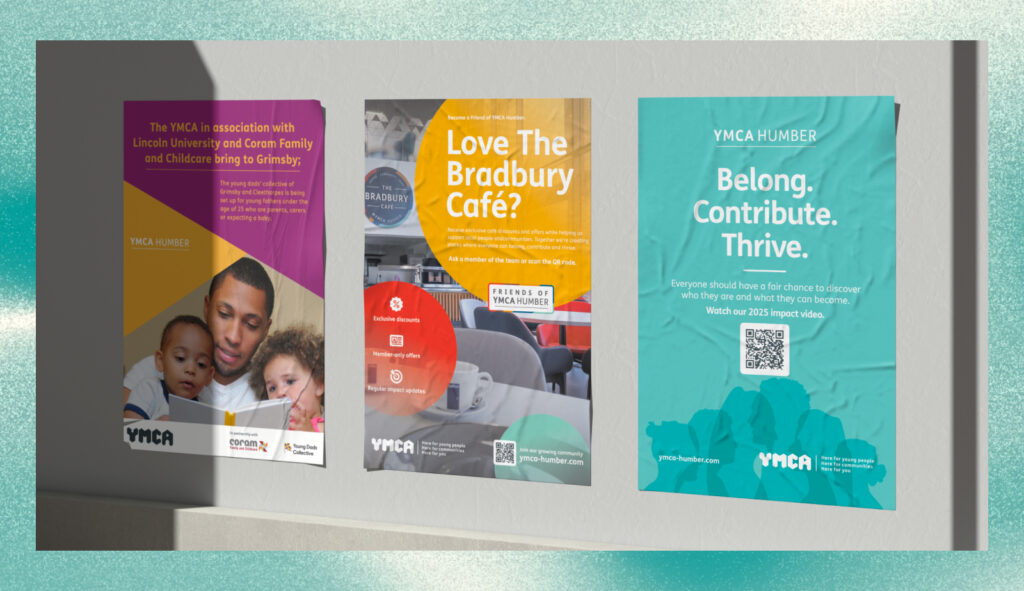
How much does print design cost in Grimsby? Print is the part of a brand people pick up, pin to a wall
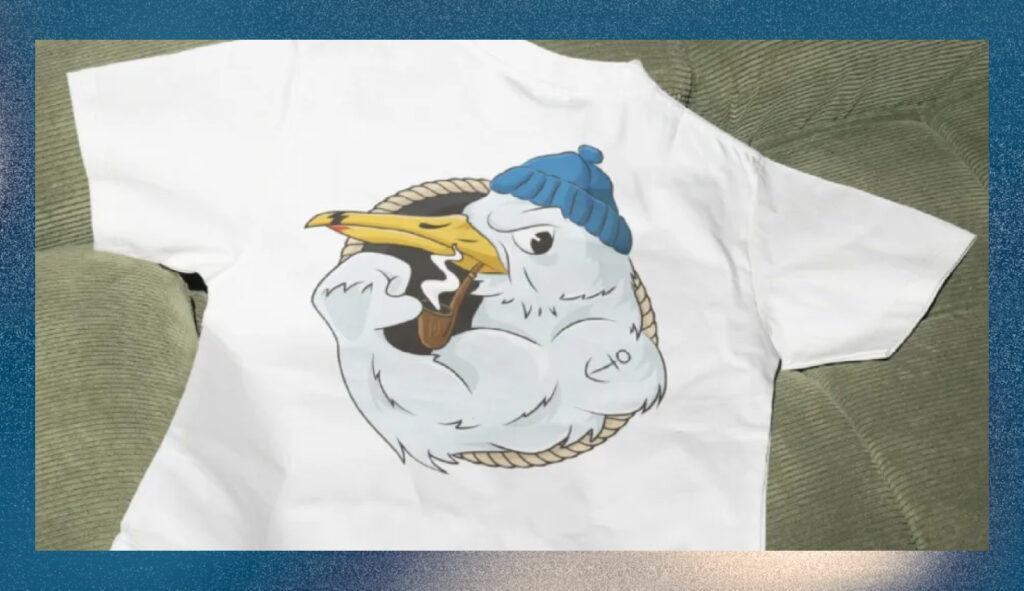
Most branded merch never leaves the cupboard. Here is what makes the difference, from a mascot with local roots to designing for print.
How to tell whether your business needs a brand refresh or a full rebrand, what each one costs, and the roll-out bill most people forget to budget for.
How much does print design cost in Grimsby? Print is the part of a brand people pick up, pin to a wall
How to tell whether your business needs a brand refresh or a full rebrand, what each one costs, and the roll-out bill most people forget to budget for.